

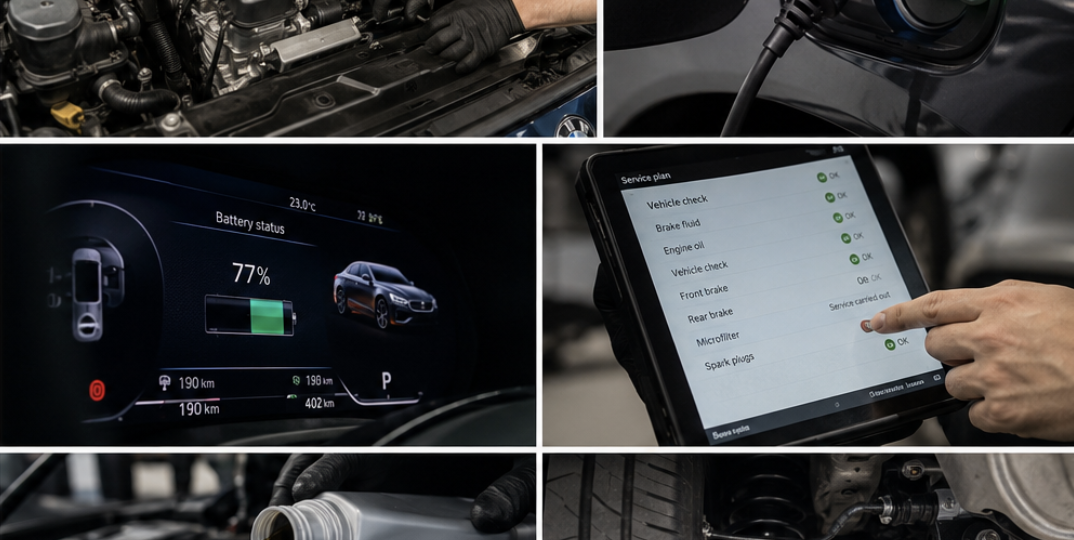
The real maintenance question usually begins after the warranty ends.
When a luxury German car is still under warranty, ownership feels more predictable. Servicing follows the schedule. Repairs are easier to assess. Major concerns feel further away because there is still coverage behind the vehicle.
Once that protection ends, the ownership reality becomes more practical.
For Malaysian owners, the discussion around electric vs petrol cars maintenance is not just about which powertrain has fewer parts. It is also about heat, traffic, charging habits, parts availability, long-distance use, road conditions, and whether the workshop understands the car properly.
A BMW iX, Mercedes-Benz EQ model, Audi e-tron, petrol BMW, Mercedes-Benz, Audi, or Porsche may feel very different to drive, but they share one important truth after warranty.
The quality of maintenance decides whether the car continues to feel refined, confident, and worth owning.
Why the Conversation Changes After Warranty
During the warranty period, many owners focus on comfort, performance, and convenience.
After warranty, priorities shift.
Owners start asking:
- What parts are likely to wear?
- What will be expensive if ignored?
- Can this car still be maintained properly outside the dealership?
- Will the car continue to feel smooth and stable?
- Is the service history strong enough to protect resale value?
This is where electric and petrol cars begin to feel very different.
An electric German car may have fewer traditional service items. There is no engine oil service, no oil filter, no ignition system, no timing chain concern, and no exhaust system to maintain.
A petrol German car has more mechanical systems to monitor, especially if it uses a turbocharged engine, performance gearbox, complex cooling system, or adaptive suspension.
The mistake is assuming that EV means “almost no maintenance” and petrol means “always problematic.”
The reality is more balanced.
EVs reduce certain types of maintenance. Petrol cars bring more familiar maintenance patterns. Both can become expensive when neglected.
Electric Car Maintenance After Warranty
Electric vehicles are simpler in some areas and more specialised in others.
The simpler side is easy to understand. A full electric car does not have a combustion engine. That means no regular engine oil changes, no oil filter, no ignition system, no spark plug replacement, and no exhaust-related maintenance.
This can make routine servicing feel lighter.
However, an EV is still a heavy, complex luxury car.
After warranty, owners still need to monitor:
- high-voltage battery condition
- battery cooling system
- electric motor and inverter performance
- software updates and fault codes
- tyres and wheel alignment
- suspension wear
- brake system condition
- air conditioning performance
- charging port and cable condition
For Malaysian owners, battery cooling and air conditioning deserve special attention.
Our climate is hot and humid. Many luxury EVs spend long hours parked under heat, moving slowly through traffic, or running air conditioning heavily during daily use. These conditions do not make EV ownership unsuitable, but they do make thermal management important.
An EV that looks simple from the outside is still dependent on cooling systems, sensors, software, and high-voltage safety systems working correctly.
This is why post-warranty EV care should be handled with the right technical understanding.
Battery Health Is the Main EV Concern
For many EV owners, the biggest post-warranty concern is the battery.
The good news is that most premium EV batteries are designed for long-term use, and many brands provide separate battery warranty coverage that lasts longer than the main vehicle warranty. A recent EV battery condition study also suggests that real-world battery degradation may be slower than many used EV buyers assume.
The more practical point is this: battery replacement is usually not a routine maintenance item, but it is the one component owners think about most once the car gets older.
Battery health can be affected by:
- charging habits
- repeated fast charging
- heat exposure
- mileage
- software management
- cooling system performance
- previous owner behaviour
This matters especially in Malaysia’s used luxury car market.
A used EV may look attractive because routine servicing seems lighter. But after warranty, buyers should still check the battery health report, charging history where available, service records, software status, and whether the car is a local official unit or an imported unit with different support conditions.
The car may have fewer moving parts, but the wrong purchase can still become costly.
Petrol Car Maintenance After Warranty
Petrol German cars are more familiar to most owners and workshops.
That does not mean they are simple.
Modern petrol BMW, Mercedes-Benz, Audi, and Porsche models are highly engineered machines. Many use turbocharged engines, direct injection, complex cooling systems, electronic gearboxes, adaptive suspension, and advanced driver assistance systems.
After warranty, proper German car maintenance usually involves more regular attention to:
- engine oil and oil filter
- spark plugs
- ignition coils
- air filter
- fuel system
- coolant system
- gearbox fluid
- brake system
- belts, hoses, and seals
- turbocharger condition
- engine mounts
- suspension components
The advantage is familiarity.
Petrol cars have been maintained in Malaysia for decades. Parts supply, technician experience, and diagnostic knowledge are more established, especially for popular German models.
The challenge is frequency and discipline.
A petrol German car may continue to feel excellent after warranty, but only when maintenance is done on time and with the correct specifications. Delayed oil changes, poor-quality fluids, ignored coolant leaks, and unsuitable replacement parts can slowly remove the refinement that made the car feel premium in the first place.
Malaysia Makes the Maintenance Reality Different
A maintenance article written for Europe or the US will not always reflect Malaysian ownership.
Here, cars deal with a different rhythm.
Luxury German cars in Malaysia often face:
- stop-start city traffic
- hot parking conditions
- heavy air conditioning use
- sudden rain
- uneven roads
- potholes
- long highway drives
- basement parking humidity
- occasional flood-prone routes
These conditions affect both EV and petrol cars.
For EVs, the focus is often on battery temperature, tyres, software, charging components, and cooling systems.
For petrol cars, the focus is usually engine heat, oil quality, turbocharger protection, coolant health, and gearbox smoothness.
For both, suspension and tyres matter more than many owners expect.
A car can have a healthy engine or battery and still feel tired if the tyres, alignment, bushings, dampers, mounts, or brakes are not properly maintained.
This is especially true for luxury German cars, where refinement is part of the ownership experience.
Tyres, Brakes, and Suspension Still Matter
Many EV discussions focus heavily on the battery.
That is understandable, but it is not the full picture.
Electric cars are usually heavier because of their battery packs. They also deliver instant torque. This can increase tyre wear, especially if the car is driven enthusiastically or the alignment is not checked regularly.
Regenerative braking can reduce brake pad wear, but the braking system still needs inspection. Brake fluid still ages. Brake discs can still corrode. Calipers still need to work smoothly. Emergency braking must still feel confident.
Suspension also carries more load in many EVs.
This means owners should not judge EV maintenance only by the absence of engine oil changes. The car still needs proper care to feel composed, quiet, and stable.
Petrol cars face similar physical wear, although for different reasons. Engine vibration, heat cycles, gearbox behaviour, and long-term mechanical stress can affect mounts, suspension, and drivetrain smoothness.
In both cases, the car’s driving feel tells a story.
A well-maintained German car should feel tight, calm, and controlled. When it starts to feel loose, noisy, harsh, or unsettled, the issue is not always the engine or battery. It may be the parts that connect the car to the road.
Software and Diagnostics Are No Longer Optional
One major difference in modern car ownership is the role of software.
This applies to electric and petrol cars.
Today’s German luxury cars depend on electronic systems that constantly communicate with each other. Battery management, gearbox control, brake assistance, steering response, suspension settings, air conditioning, driver assistance, and charging systems all rely on accurate data.
After warranty, proper diagnostics become essential.
Guesswork can lead to unnecessary part replacement. A warning light may not tell the full story. A small fault in one system can affect how another system behaves.
For EVs, diagnostics are especially important for:
- battery state of health
- charging faults
- cooling system behaviour
- high-voltage warnings
- software updates
- motor and inverter performance
For petrol cars, diagnostics help identify:
- misfires
- sensor faults
- gearbox adaptation issues
- turbocharger-related errors
- cooling system problems
- fuel trim irregularities
- emission system warnings
A disciplined workshop does not only clear codes.
It understands what the codes mean, checks the supporting systems, and confirms whether the car is behaving as it should.
Which Is Cheaper to Maintain After Warranty?
In general, electric cars can have lower routine maintenance because there are fewer traditional wear items.
That part is true.
However, the post-warranty reality is not only about routine servicing. It is also about risk.
EV owners may save on engine-related maintenance, but they must be prepared for specialised diagnostics, battery-related checks, charging system issues, high-voltage safety requirements, and potentially higher costs if a major EV component fails outside coverage.
Petrol owners usually face more frequent maintenance, but many issues are familiar, parts are easier to source, and experienced technicians are more widely available.
So the better question is not simply, “Which one is cheaper?”
The better question is:
Which car has the right service history, the right support network, and the right workshop behind it?
A poorly maintained petrol car can become expensive quickly.
A poorly checked used EV can also become expensive quickly.
The safest ownership path is not choosing based on powertrain alone. It is choosing based on condition, history, usage, and support.
Hybrid and Plug-In Hybrid Owners Should Be Extra Careful
There is also a middle category many Malaysian luxury car owners know well: plug-in hybrid models.
These cars can be attractive because they combine electric driving with petrol flexibility. However, from a maintenance perspective, they can carry both sets of responsibilities.
A plug-in hybrid may still require:
- engine oil service
- fuel system maintenance
- spark plug replacement
- gearbox care
- hybrid battery monitoring
- cooling system checks
- electric motor diagnostics
- charging system inspection
This does not make hybrids a bad choice.
It simply means owners should understand what they are buying. A plug-in hybrid is not as simple as a full EV, and it is not exactly the same as a normal petrol car.
After warranty, this distinction matters.
A good hybrid can still be refined, efficient, and enjoyable to own, but it needs a workshop that understands both combustion and electrified systems.
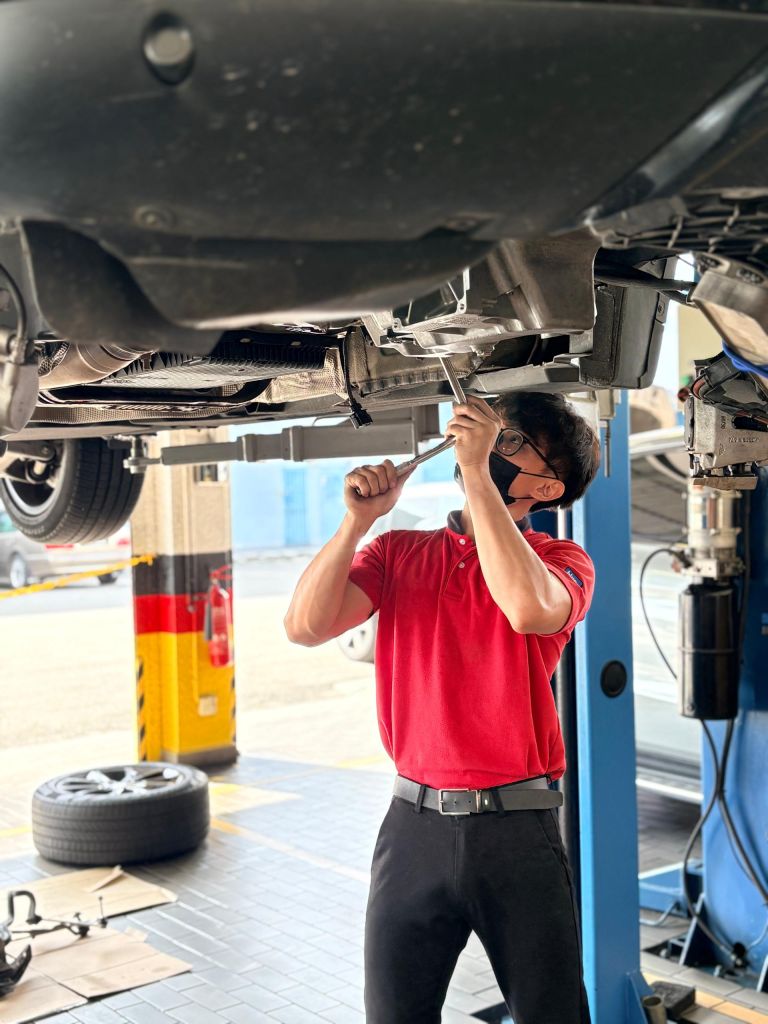
The Value of a Disciplined Specialist German Car Workshop
After warranty, the workshop becomes part of the ownership decision.
This is especially important for German luxury cars because refinement depends on details. The right oil specification, correct coolant, proper diagnostic procedure, accurate fault interpretation, torque settings, software awareness, and quality parts all affect how the car feels.
German Marque’s German car services are built around this standard: maintaining the vehicle as a complete system, not only fixing isolated issues.
The same discipline also applies to other premium marques that require careful post-warranty attention, including owners looking for professional Jaguar service and maintenance or Aston Martin service and maintenance.
For petrol cars, this means managing mechanical wear before it becomes costly.
For electric cars, this means respecting high-voltage systems, battery health, cooling performance, and software behaviour.
For both, it means treating the car as a complete system.
Final Thoughts
The maintenance reality between electric and petrol cars is more balanced than it first appears.
Electric cars usually reduce routine mechanical servicing. Petrol cars require more regular attention, but their maintenance path is familiar and well established. Hybrids sit between both worlds and need especially careful understanding after warranty.
For Malaysian luxury car owners, the decision should not be based on online assumptions alone.
Our roads, heat, traffic, charging habits, used car market, and parts availability all shape the real ownership experience.
An EV can be easier to maintain in some areas.
A petrol car can be more predictable in others.
Both can become costly when neglected.
After warranty, the best car is not simply electric or petrol.
It is the car with a clear history, proper diagnostics, disciplined maintenance, and a workshop that understands how German engineering should feel on Malaysian roads.
For owners who want a clearer view of their car’s post-warranty condition, speak to German Marque for a proper inspection and maintenance recommendation.